VW Beetle
What to Check Before Buying a Classic VW Beetle
Inspect rust, heater channels, documents, engine condition, brakes, steering, electrics, and modifications before buying a classic Volkswagen Beetle.
VW Beetle
Inspect rust, heater channels, documents, engine condition, brakes, steering, electrics, and modifications before buying a classic Volkswagen Beetle.
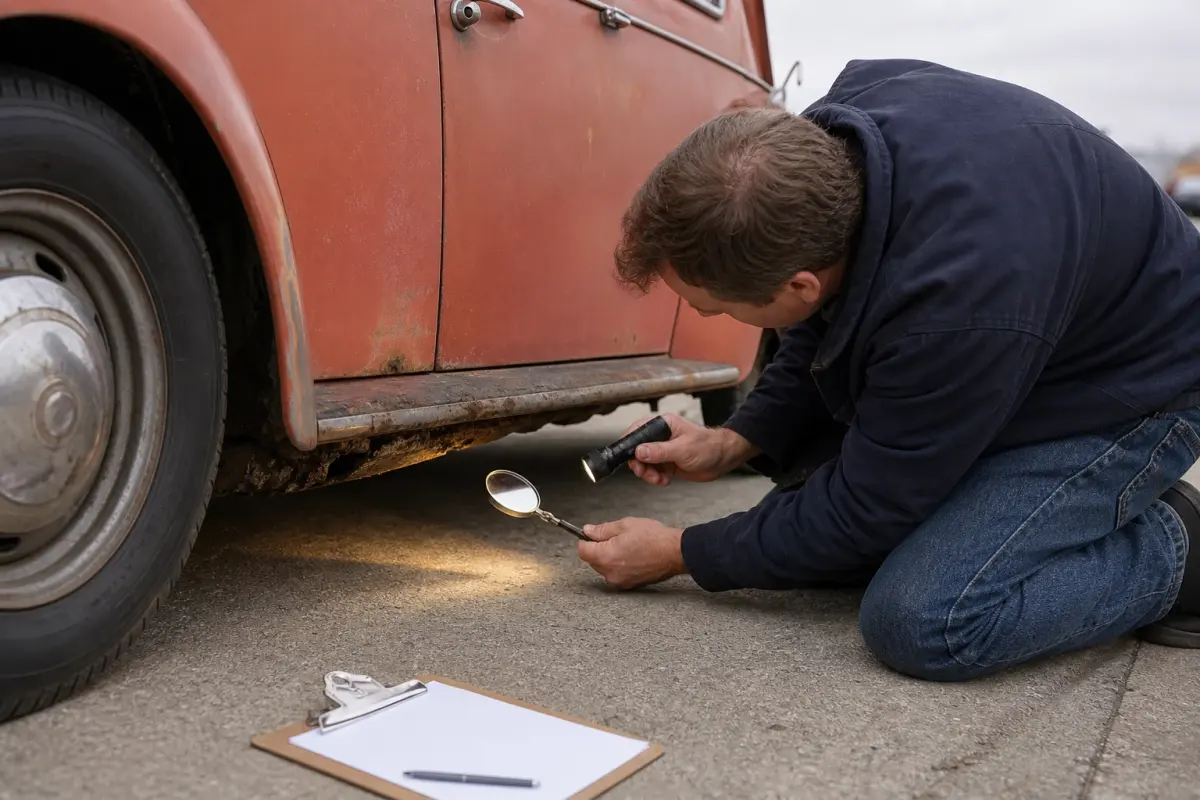
Inspect identity, structural rust, mechanical condition, brakes, steering, electrics, and modifications in a repeatable order before deciding whether a classic VW Beetle is right for you.
A classic Volkswagen Beetle needs a different inspection from a modern used car. New paint and a restoration description can still conceal structural corrosion, incomplete repairs, mechanical wear, or mismatched components. Judge the individual car from its records, structure, systems, and road behavior rather than appearance or broad claims about the model.
Collectors may care about original engine numbers, factory colors, and correct trims. As a beginner, you should care more about a solid shell, clean documents, and honest mechanical condition. A replacement engine is not automatically unsuitable, but its identity, capacity, installation, cooling, fuel, exhaust, electrical arrangement, documents, and condition should be verified rather than assumed from appearance.
Do not proceed when ownership, chassis identification, registration details, or the seller’s description conflict. Resolve the discrepancy through the appropriate local authority or an independent specialist before paying a deposit; a verbal promise that documents can be corrected later is not evidence.
Compare the vehicle identity and registration information with the car and the seller’s explanation. Check ownership, chassis identification, engine description, model year, import or inspection records, and invoices where available. Requirements vary by jurisdiction, so confirm locally rather than accepting a verbal assurance that paperwork can be corrected later.
Prioritize the structure before cosmetic finish or easily replaced service parts. Corrosion and poorly aligned structural repairs can affect doors, body mounting, suspension reference points, and the cost and practicality of restoration, so establish their extent before estimating the remaining work.
Check the floor pans carefully. These are the flat metal sections under the seats and footwells. Rust here is common, especially around the battery tray under the rear seat. Surface rust is manageable; soft metal, holes, thick undercoating, or fresh paint hiding repairs are warning signs.
Also inspect heater channels. These run along the lower sides of the car and are structural. If they are rotten, the doors may not close properly, the body may sag, and repairs can become expensive. A Beetle with bad heater channels is not a beginner-friendly project.
Look beneath paint, trim, carpet, seals, and undercoating where inspection is permitted. Uneven seams, swelling, bubbling, fresh coating over dirt, blocked drain holes, and inconsistent repairs deserve closer examination. Cosmetic condition is easier to judge than hidden structure, so resist letting new paint or accessories set the value of the car.
Heater channels contribute to body structure and are expensive to repair correctly. Inspect their full length, door openings, jack points, lower pillars, floor edges, battery area, seat mounts, and pan halves. Use safe access and proper lifting equipment. A localized patch may hide broader corrosion or an earlier repair that did not restore alignment.
Many Beetles advertised as restored are really just repainted. A fresh paint job can hide filler, accident damage, and rust. Look along the sides of the car in natural light. Wavy reflections can indicate filler or surface repair and should prompt closer inspection rather than be treated as proof by themselves. Check door gaps, bonnet alignment, engine lid fit, and whether the doors shut cleanly without lifting or slamming.
Useful restoration evidence can include dated photographs, invoices, measurements, parts records, and a clear explanation of the work. Verify the car itself even when detailed records are available.
Check panel gaps, door closure, bonnet and deck-lid alignment, spare-wheel well, aprons, inner wings, roof, glass openings, and bumper mounts. Look for welds, filler, distorted metal, overspray, and mismatched texture. Ask what was repaired, by whom, and whether photographs or invoices show the work before paint concealed it.
Ask to see the engine cold, observe starting and warning-light behavior, listen at idle and under a safe load, and inspect for smoke, leakage, damaged fuel hose, incomplete cooling parts, or abnormal noise. A warm engine prepared before the viewing can conceal a starting or running symptom.
After the road test, allow a safe inspection for fresh leakage, unusual heat or smell, changes in idle, difficult restarting, and warning-light behavior. Judge the result against the engine and gearing actually installed rather than assuming every Beetle should accelerate, cruise, or sound the same.
Inspect cold starting when possible, oil leaks, exhaust smoke, warning lights, idle, throttle response, end play checks appropriate to the engine, cooling tin, fan belt, fuel hoses, wiring, and service history. A brief smooth idle is not a complete health test. Compression, leak-down, oil-pressure, or specialist tests may be justified before purchase.
During a safe road test, check clutch take-up, slip, judder, pedal operation, gear selection, synchronizer behavior, unwanted movement, and noise on acceleration and overrun. Confirm that reverse engages correctly and that leaks or linkage wear are not being dismissed as normal. Diagnosis should distinguish an adjustment issue from internal wear.
Steering, suspension, tire, and brake faults should be priced as safety work, not bargaining details to ignore. Excessive free play, wandering, vibration, pulling, leakage, a changing pedal, or structural movement warrants inspection before another road test.
Look at tire wear too. Uneven wear can point to poor alignment, worn suspension, or a bent chassis.
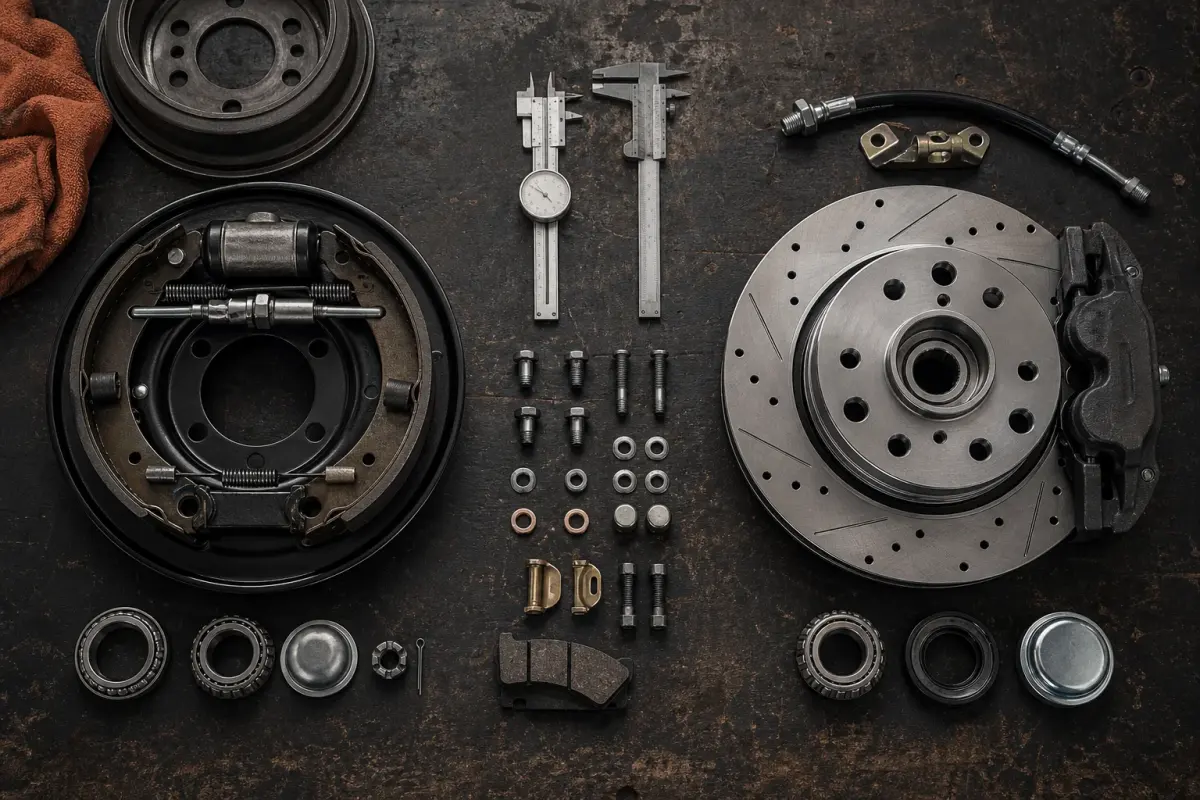
Check pedal feel, straight braking, parking-brake operation, fluid leaks, hoses, lines, drums or discs, wheel bearings, tires, steering play, ball joints or king-and-link pins, dampers, and suspension mounting areas as applicable. A road test should be abandoned if braking, steering, tires, or structure are unsafe. Read the brake comparison guide for system context.
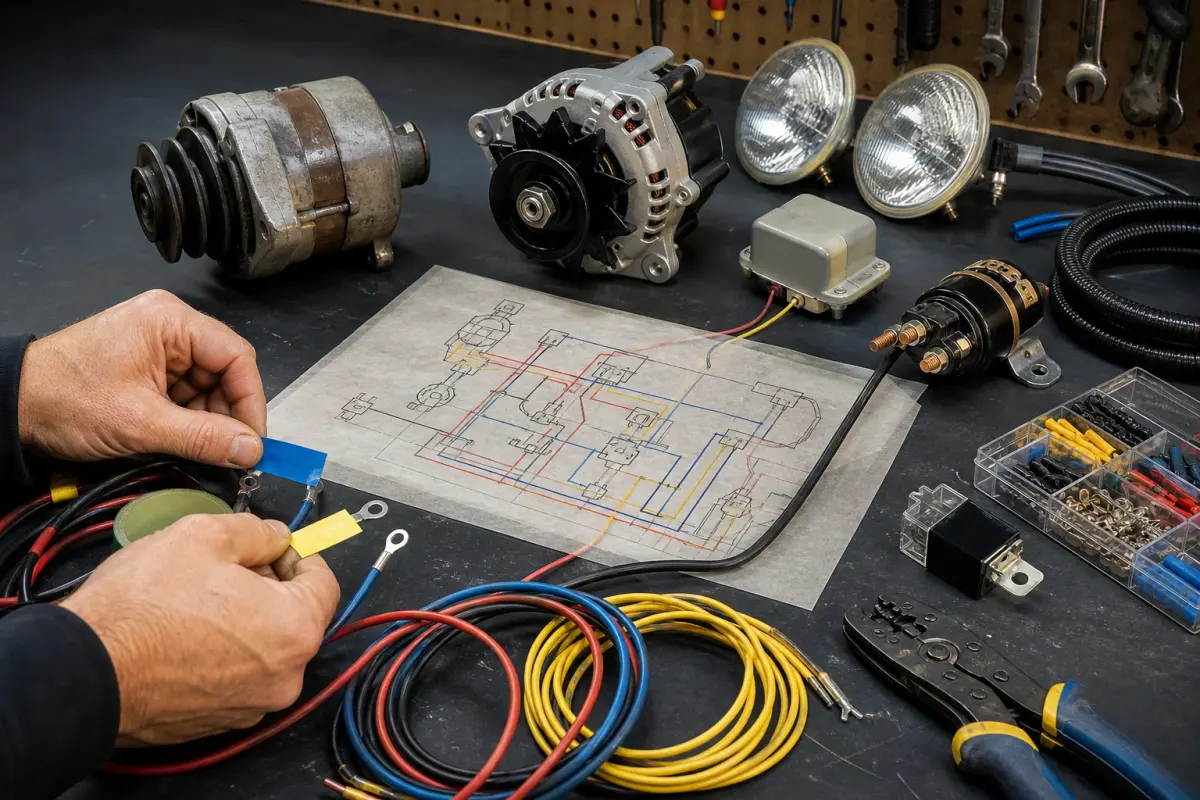
Determine whether the car is 6V or 12V and whether a conversion was completed coherently. Test starting, charging, lights, indicators, horn, wipers, instruments, warning lamps, switches, fuses, grounds, and visible wiring. Added accessories, unfused circuits, overheated connectors, and mixed-voltage parts warrant careful inspection. Use the electrical conversion guide as a checklist.
Record every visible modification and ask for the component specification, installer, date, supporting changes, maintenance requirements, and local approval where applicable. The important distinction is not original versus modified, but documented and coherent versus unknown or incomplete.
A modification is not automatically good or bad. Identify the component, purpose, installer, supporting parts, service needs, and whether the change can be maintained. Check suspension height, wheels and tires, engine changes, brake conversions, wiring, body cuts, and interior alterations together. Confirm local requirements rather than assuming a previous owner’s use proves compliance.
Start with controls and visibility, then use a route that safely reveals low-speed steering, clutch action, gear changes, braking, straight tracking, vibration, engine response, cooling behavior, and restart condition. Listen with the radio off. Do not test beyond safe or legal conditions, and do not let the seller’s route prevent inspection of a known concern.
A suitable first Beetle is usually one with clear documents, a sound structure, understood mechanical condition, working safety systems, and repair needs that fit the buyer’s budget and access to specialist help. Documented condition matters more than age, rarity, accessories, or a fresh cosmetic finish.
Ask how long the seller has owned the car, why it is being sold, what fails to work, what rust or accident repair was completed, which parts were changed, what maintenance is due, whether the engine and electrical system differ from the description, and which records are available. Record answers and compare them with the car.
Complete the inspection in daylight, compare the car with its advertisement and records, and arrange independent help for structure, identity, or safety-critical systems that cannot be assessed confidently. Make the decision from documented condition and realistic repair scope rather than paint, trim, or accessories.
A carefully inspected Beetle can be an engaging classic to own, while hidden corrosion and incomplete repairs can create substantial work. Base the decision on documented condition, an independent inspection, realistic repair costs, and access to appropriate parts and service.
Verify identity and documents; inspect heater channels, floors, pillars, body mounts, accident repairs, engine, gearbox, clutch, brakes, steering, suspension, tires, charging, lights, wiring, modifications, leaks, and road behavior. Price the unresolved work before negotiating. Walk away when access is refused, the identity is unclear, or safety-critical defects cannot be assessed. Photograph findings with the seller’s permission and separate immediate safety work from routine service, cosmetic work, and optional upgrades. Obtain quotations for structural repair, paint removal, engine work, transmission faults, brake renewal, tires, wiring, and missing trim rather than relying on a round-number estimate. Confirm which parts and specialists are realistically available where the car will be maintained. Revisit the car in daylight when possible, compare the written advertisement with the inspection notes, and let an independent specialist challenge the decision before money changes hands. A slower, documented purchase is usually easier to live with than a rushed decision built around paint, accessories, or a short test drive. Keep the completed checklist with the inspection report, invoices, and seller correspondence.
Inspection order
A consistent order makes it harder for attractive paint or accessories to distract from identity, structure, and safety.
Record the result rather than relying on memory after the viewing.
References
Use the source that matches the vehicle, year, installed parts, and location. A general guide cannot replace the correct service information or an inspection of the individual car.
Volkswagen’s overview of the many body and equipment changes across Beetle production.
Current inspection reference for structural, braking, steering, suspension, tyre, and electrical safety areas in Great Britain.
Official repair-guide archive for specified Volkswagen Type 1 and Beetle model ranges; use only the guide that matches the individual vehicle and year.
Fitment support
Tell us your Volkswagen model, year, and the part you are considering.
Related parts
See parts related to this guide and ask about fitment before checkout.
Browse matching partsContinue reading
Share your VW model, year and part, or include your order number.
Start a new chat for another question. Our support team will still have the closed conversation.