VW Beetle
What Driving an Air-Cooled VW Beetle Feels Like
Discover the steering, sound, pace, visibility, mechanical character, and everyday experience that make driving an air-cooled VW Beetle distinctive.
VW Beetle
Discover the steering, sound, pace, visibility, mechanical character, and everyday experience that make driving an air-cooled VW Beetle distinctive.
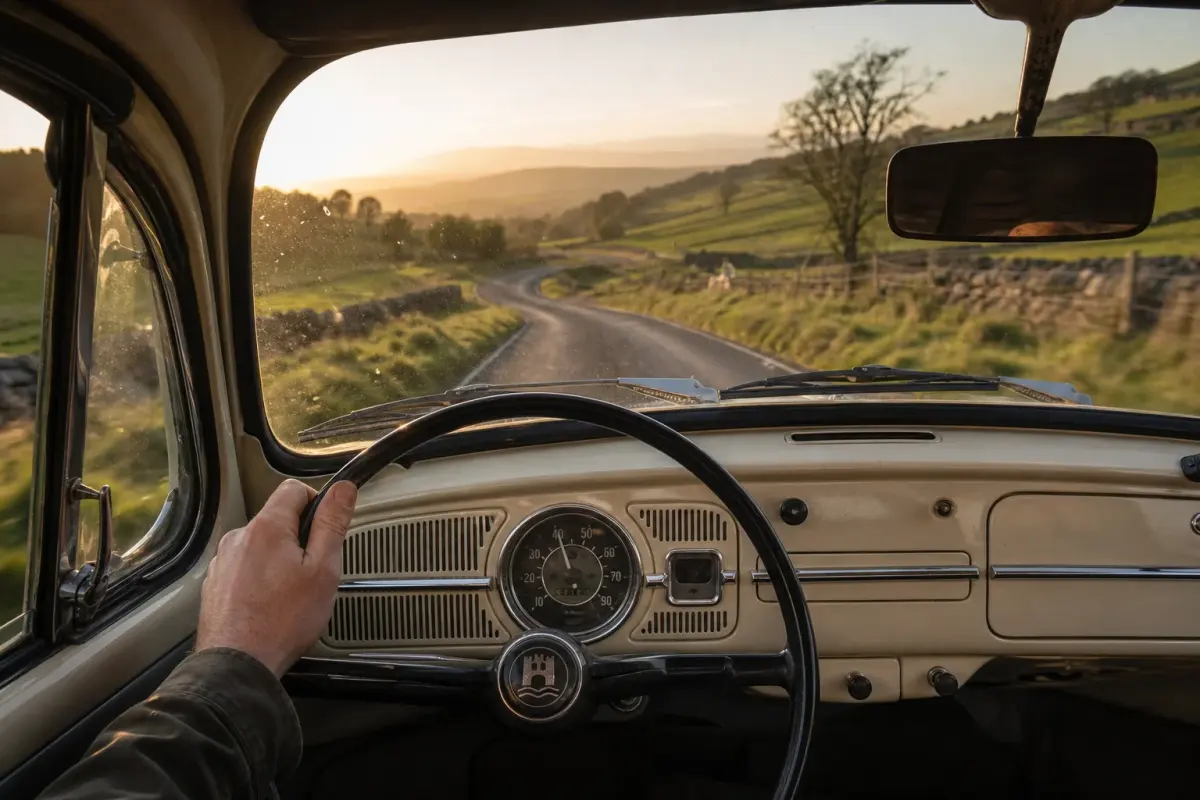
A well-maintained air-cooled VW Beetle feels direct and mechanical, but the precise experience depends on the car’s year, condition, setup, and modifications.
Driving a classic Volkswagen Beetle is not a slower version of driving a modern car. The controls, visibility, sound, steering, braking, ventilation, and pace ask the driver to participate. That involvement is the point. A well-sorted Beetle can feel friendly and remarkably usable, but it rewards mechanical sympathy and a few minutes of preparation.
Every surviving Beetle has its own year, market specification, condition, repairs, and modifications. Treat this description as a framework for observing one car rather than a substitute for its owner’s manual, service information, or an inspection.
For an unfamiliar car, begin on a quiet, suitable route and establish a baseline at low speed. Confirm seat and mirror position, pedal travel, steering free play, warning-light behavior, gear selection, brake response, visibility, and any existing noise before increasing speed. Stop if a control changes, a warning remains illuminated, braking or steering is uncertain, or a new smell, vibration, leak, or mechanical sound appears.
Condition matters more than nostalgia. A maintained Beetle can communicate clearly through consistent controls and sounds, while wear or an incomplete repair can make the same design vague or unsafe. Note the difference between a characteristic that remains stable and a symptom that changes with speed, temperature, load, braking, or steering input.
The upright glass and slim pillars give a classic Beetle an open, easy-to-place feel. The front wings help show where the corners are, while the compact footprint makes narrow streets less intimidating than the shape may suggest. The driving position is simple rather than heavily adjustable, so comfort depends on a correctly fitted seat, sound runners, and pedals that move freely.
Take time to learn the floor-hinged pedals and the spacing between them. A sticky throttle, excessive clutch free play, or brake pedal that changes feel is a mechanical issue, not “old-car character.”
Before moving, confirm that the seat locks securely, the mirrors provide useful coverage, every pedal can complete its travel, and the steering wheel and controls can be used without obstruction. Those checks distinguish the Beetle’s simple layout from wear or adjustment that needs attention.
At parking speed, an unassisted Beetle asks for more effort than a modern power-steered car. Once moving, the steering should become light and predictable. The large wheel and direct feedback make small road speeds enjoyable, but looseness, wandering, knocking, or a steering wheel that refuses to self-center deserves inspection.
Tires, pressures, wheel alignment, ball joints or link pins, tie rods, steering damper, wheel bearings, and the steering box can all affect the result. Do not mask a worn front end by simply accepting constant correction as normal.
Compare steering behavior on smooth and uneven surfaces at a safe speed, noting free play, self-centering, vibration, pull, and the effect of braking. Tires, pressure, alignment, suspension joints, bearings, damper, and steering-box condition should be checked before a persistent correction is accepted as character.
The engine is behind you, so its sound arrives differently from a front-engined car. You hear cooling fan, exhaust, induction, and valvetrain together. Familiarity helps: a steady mechanical note is useful information, while a new knock, sharp rattle, exhaust leak, loss of power, or warning light should not be drowned out by the radio.
Cooling depends on the fan, belt, engine tin, seals, thermostat arrangement where fitted, correct tune, and an unobstructed airflow path. The engine lid and surrounding seals are part of the system. If temperature or power changes, use the checks in our air-cooled Beetle overheating guide rather than assuming every hot smell is harmless.
Learn the normal sound of the individual car only after its valve adjustment, exhaust sealing, fan drive, engine tin, and tune are understood. A later change in rhythm, sharpness, volume, or accompanying warning-light behavior is useful diagnostic information rather than part of the expected soundtrack.
Plan farther ahead than you would in a modern vehicle. Leave a larger following gap, preserve momentum without tailgating, and give yourself room to merge. Avoid sitting in another driver’s blind spot. On faster roads, use a speed appropriate for the car, its tires, brakes, gearing, condition, weather, and local rules.
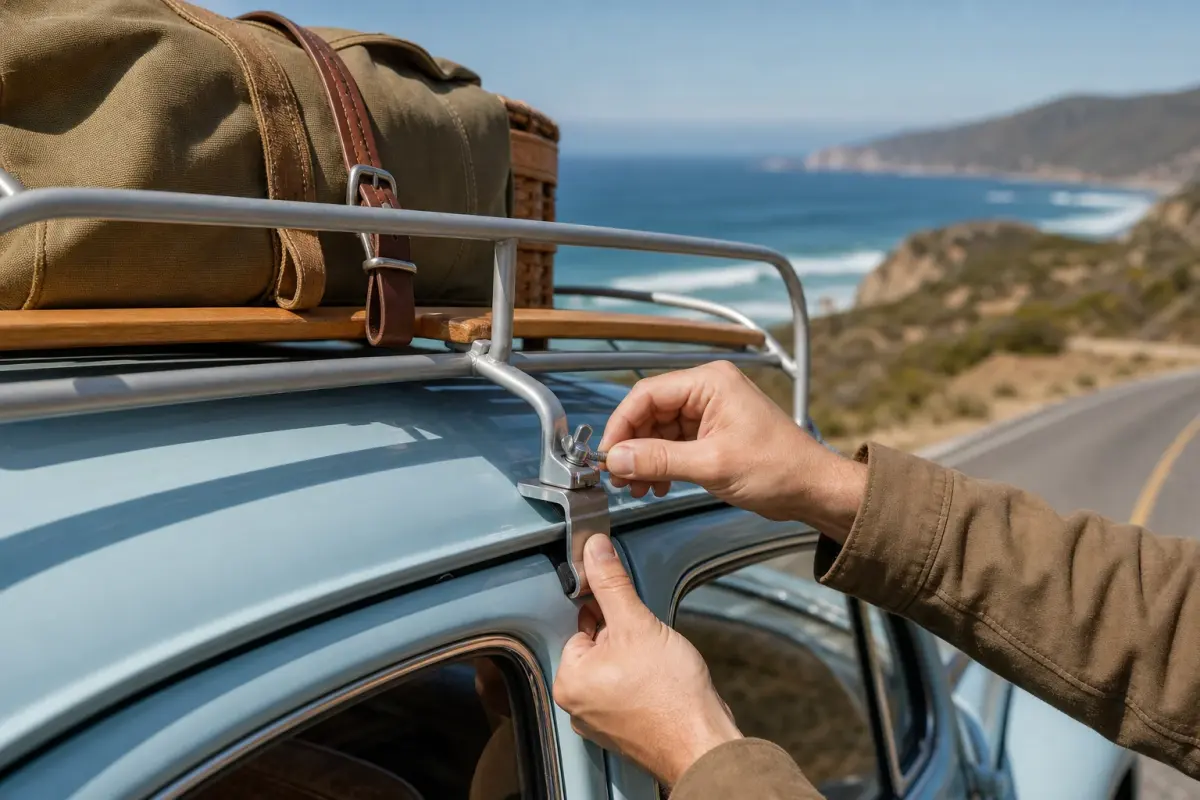
A Beetle can cover real distance when maintained properly, but a long trip is easier with a basic tool roll, correct spare parts, tire equipment, contact details, and a realistic route. A roof rack may add luggage room; our VW Beetle roof-rack guide explains fitment and load checks.
Engine size, gearing, load, altitude, tune, and condition affect how readily a Beetle joins traffic or holds speed. Choose gaps conservatively, leave room to slow without abrupt inputs, and use a route appropriate to the car while learning its response; modifications do not substitute for sound cooling, brakes, steering, and tires.
The Beetle’s four-speed manual encourages deliberate changes. Do not rush the lever or use it as a handrest. Pause as you pass through neutral, let the clutch do its work, and avoid forcing first gear while the car is still moving unless the transmission and driving situation clearly allow it.
A vague shift can come from worn bushings, an incorrectly adjusted stop plate, drivetrain mounts, clutch adjustment, or internal wear. A healthy linkage should feel simple and repeatable. Learning that rhythm is one of the pleasures of the car.
The driver coordinates clutch travel, a deliberate gearshift, engine speed, and early braking. A maintained drum-brake system can be predictable, but pulling, fading, excessive travel, grinding, or poor stopping needs repair. Gear crunching, clutch slip, or selection difficulty also requires diagnosis. Read the brake comparison guide before assuming a conversion is the first answer.
Classic Beetle cabin heat uses engine cooling air routed through heat exchangers, so cable adjustment, hoses, exchangers, body channels, and seals all matter. Any exhaust smell in the cabin requires immediate attention. Ventilation and demisting also depend on the condition and configuration of the individual car.
Rain changes the experience quickly if wipers, washers, window seals, door seals, or demisting are weak. Test them before a long journey, not when visibility has already disappeared.
Test heat, ventilation, demisting, wipers, washers, lights, and seals before relying on the car in poor weather. An exhaust smell in the cabin, inadequate visibility, water reaching electrics, or a control that cannot maintain a clear windscreen requires correction rather than tolerance.
Walk around the car before setting off. Check tire condition and pressure, look for fresh fluid beneath the engine or gearbox, confirm the engine lid is latched, and make sure the lights and indicators work. Inside, adjust the seat and mirrors, locate the choke or heater controls fitted to that particular car, and learn the gear pattern before moving.
A cold engine should start and settle without prolonged revving. Warning lights should behave as the manual describes. If the oil-pressure or charging warning stays illuminated, stop and investigate rather than hoping it will disappear. The hot-start diagnosis guide explains how to separate cranking, fuel, and ignition symptoms when a restart problem appears.
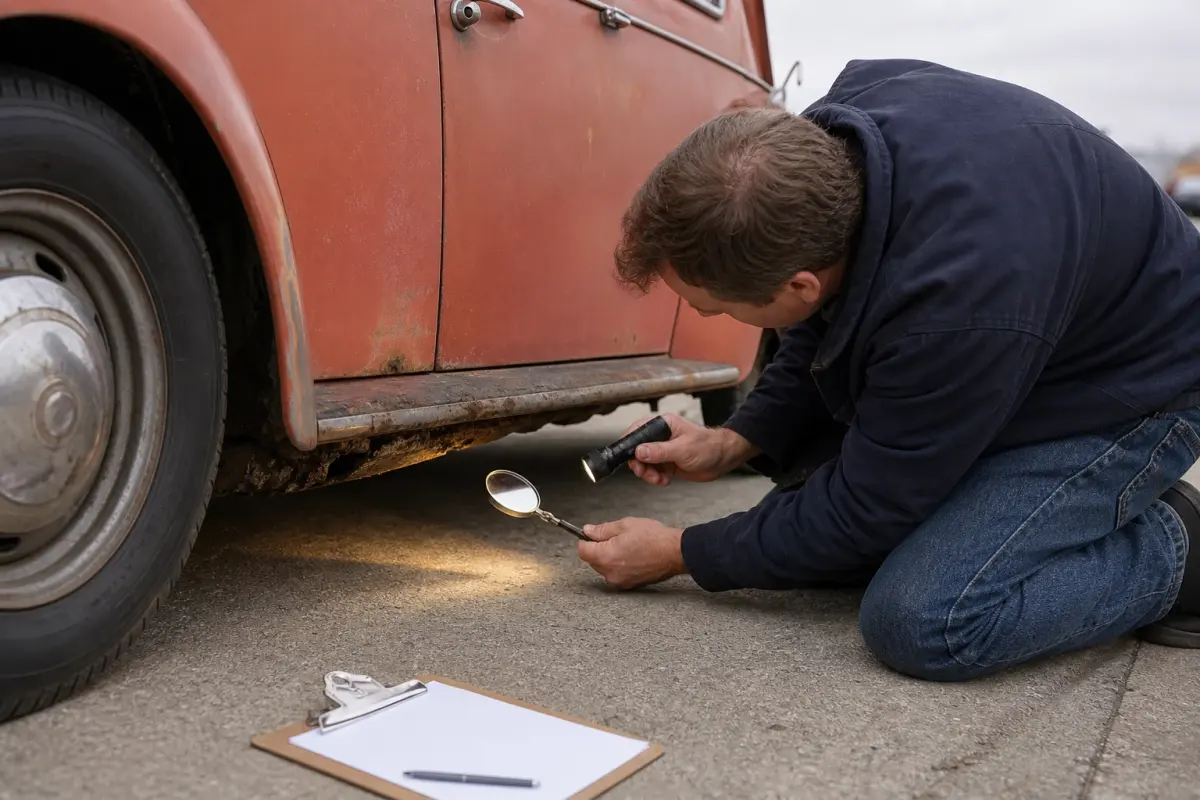
Regular checks become part of ownership: oil level, belt, tire pressure, lights, leaks, fuel hoses, brake feel, steering, and unusual sounds. Parts and specialist support vary by location, and older repairs may require patient investigation. A pre-purchase inspection and a baseline service help separate normal maintenance from inherited faults. Use the buying guide before choosing a car.
The appeal is not that the Beetle hides its age. It is that the car makes modest speeds and ordinary roads feel like an event. The view over the wings, the mechanical soundtrack, the gear-change rhythm, and the response through the steering create a clear connection between driver and machine.
That character comes through when the car is maintained rather than romanticized. Good brakes, tight steering, correct tires, healthy cooling, working lights, and predictable controls do not remove personality; they let you enjoy it.
The connection comes from learning a specific car’s controls and responses, not from overlooking its limits. Leave generous space, listen for changes, and finish an unfamiliar drive by checking for leaks, heat, loose trim, or a new smell. View Volkswagen builds and fitted details to see how surviving cars vary in condition and configuration.
Reading the experience
The observations in this story describe the character of a classic Beetle, not a promise that every example will behave identically.
References
Use the source that matches the vehicle, year, installed parts, and location. A general guide cannot replace the correct service information or an inspection of the individual car.
Volkswagen’s historical account of the Beetle’s design, sound, character, and development.
Model changes that explain why the driving experience varies between individual Beetles.
Keep exploring
Continue with practical ownership, inspection, and technical articles.
Browse all Volkswagen guidesVolkswagen gallery
Browse vehicle, interior, fitted-part, and product photography.
View the Volkswagen galleryContinue reading
Share your VW model, year and part, or include your order number.
Start a new chat for another question. Our support team will still have the closed conversation.