VW Beetle
VW Beetle Drum Brakes or a Disc Conversion?
Compare VW Beetle drum brakes with a disc conversion, including maintenance, suspension type, wheel pattern, clearance, balance, and intended use.
VW Beetle
Compare VW Beetle drum brakes with a disc conversion, including maintenance, suspension type, wheel pattern, clearance, balance, and intended use.
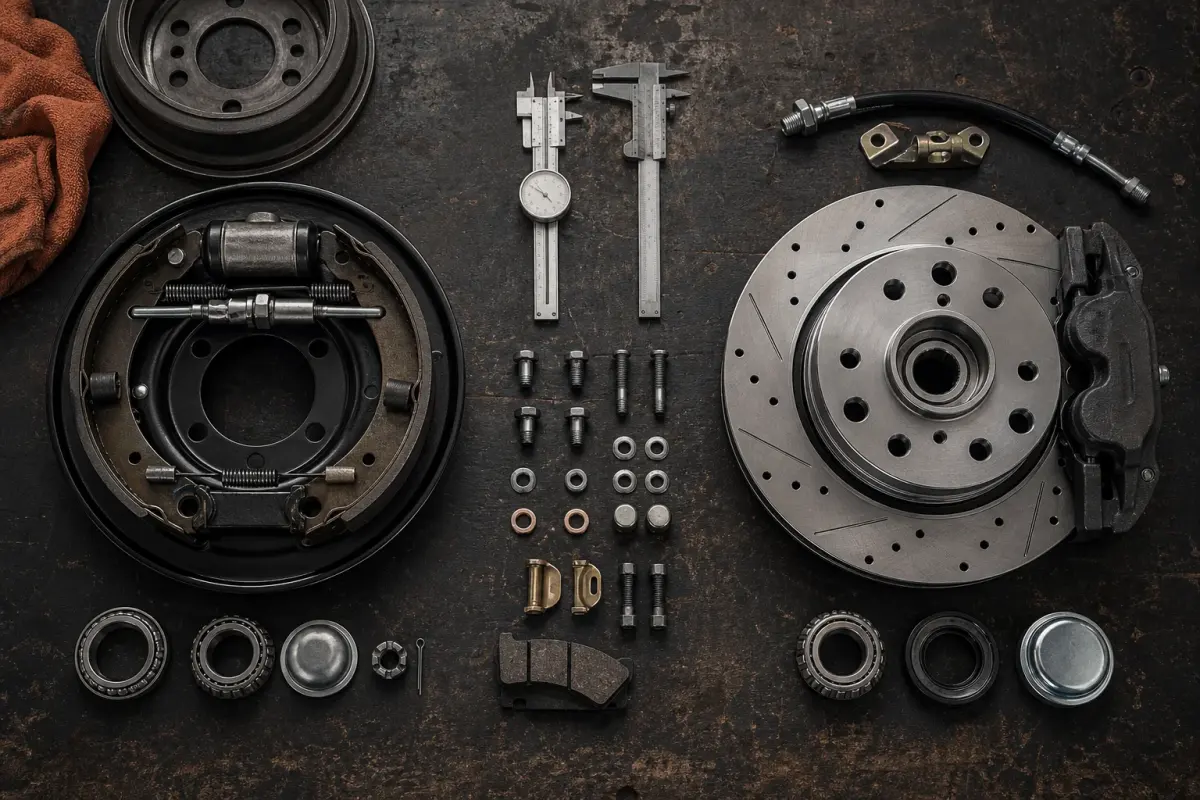
Compare a sound, correctly adjusted drum-brake system with a properly specified disc conversion by considering the complete car, maintenance, suspension, wheels, balance, and intended use.
A classic VW Beetle still requires predictable braking. The condition of the drums, shoes, adjusters, wheel cylinders, hoses, lines, master cylinder, fluid, bearings, tires, suspension, and pedal setup all influence the result. Age, contamination, corrosion, leakage, wear, or incorrect adjustment can create a fault that should not be accepted as normal behavior.
The useful comparison is whether the existing drum system should be correctly restored and maintained or whether a documented disc conversion suits the individual car, wheels, suspension, intended use, and local requirements.
Before selecting a disc conversion, inspect the complete existing brake system. A correctly specified and maintained drum-brake system should be evaluated on its actual condition, adjustment, hydraulic integrity, tires, suspension, and intended use rather than dismissed solely because it uses drums.
Excessive pedal travel, pulling, leakage, vibration, noise, or weak braking requires inspection of the complete hydraulic and mechanical system. A conversion cannot correct contaminated fluid, unsafe tires, worn bearings, damaged lines, incorrect pedal free play, or neglected rear brakes that remain on the car.
Drum brakes use shoes that press against the inside of a rotating drum. Their operation depends on sound drums, suitable shoes, correct wheel cylinders, dry friction surfaces, flexible hoses, hard lines, master cylinder, adjustment, fluid, bearings, tires, and pedal free play. A fault anywhere in the system can feel like a design limitation.
A front disc conversion changes the friction components, adjustment needs, heat behavior, and parts required at the wheel. The result depends on the selected kit, hydraulic system, suspension type, wheel fitment, tires, vehicle mass, balance, installation, and intended use; a conversion is not a substitute for repairing the rest of the system.
Many conversions change the front friction and hub components while retaining a rear drum arrangement, but that pattern does not establish suitability. The selected front and rear components, master cylinder, hoses, wheels, tires, and balance must be evaluated as one documented system.
A disc setup replaces the relevant drum, shoes, wheel cylinder, and supporting hardware with a rotor, caliper, pads, bracket or spindle arrangement, hoses, and compatible hub components. It can change track width, wheel position, hydraulic requirements, service parts, unsprung mass, and parking-brake details. Evaluate the complete system.
Drum-brake inspection and adjustment must follow service information for the exact brake assembly. Safely supporting the vehicle, identifying the adjusters, inspecting shoe and drum condition, checking hydraulic components, and establishing the specified running clearance all require the correct procedure and tools. An instruction copied from another year or brake arrangement can produce incorrect adjustment, drag, heat, excessive pedal travel, or uneven braking.
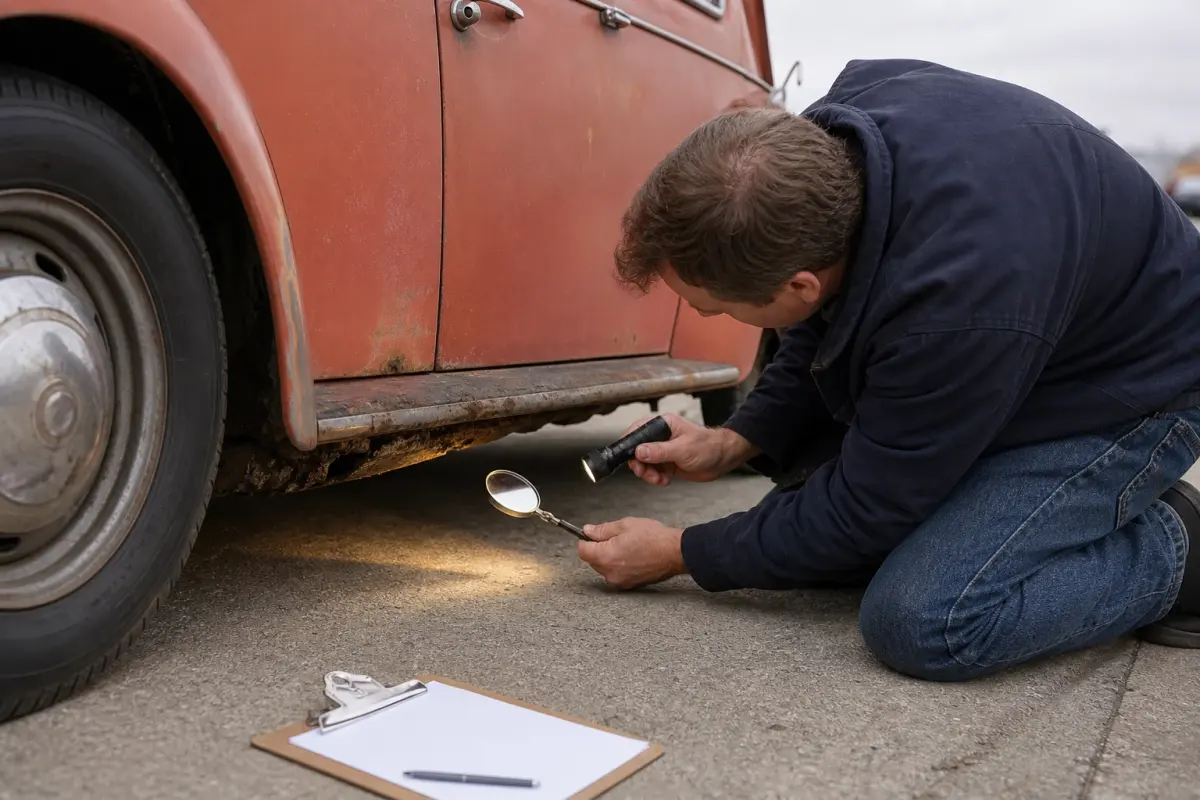
Before adjustment, inspect for fluid leakage, contaminated friction material, damaged springs or hardware, seized adjusters, drum wear, hose condition, bearing play, and unsafe corrosion. Parking-brake adjustment must not be used to conceal an incorrectly adjusted or defective rear service brake. Keep lubricant away from the shoes and drum friction surface, use only suitable products in the locations identified by the service procedure, and replace unserviceable parts rather than forcing a seized mechanism.
After any brake work, verify pedal reserve, free movement, parking-brake operation, leak-free hydraulics, even adjustment, wheel rotation, and the complete system before road use. Brake work is safety-critical; use a qualified professional when the condition, specification, adjustment, bleeding, or final test is uncertain.
Many drum systems require periodic shoe adjustment and inspection. Disc pads generally self-compensate for wear, but rotors, calipers, slides, seals, hoses, fluid, bearings, and mounting hardware still require maintenance. A conversion does not remove the need for correct fluid service, leak inspection, tire condition, and balanced braking across the car.
Choose from the condition of the present system and the car’s intended use rather than a general label such as standard, modified, casual, or performance. Maintenance access, parts availability, wheel compatibility, local requirements, and the ability to verify the finished balance are part of the decision.
Renewing worn shoes, drums, wheel cylinders, hoses, fluid, and related components and completing the specified adjustment can materially change brake behavior. Pulling, excessive pedal travel, leakage, fading, vibration, or poor stopping still requires diagnosis before the car is driven.
Well-maintained drums can be appropriate for many standard cars and driving patterns. Discs may offer different heat behavior and repeatability in demanding use, but results depend on components, installation, tires, road surface, weight, and balance. No stopping-distance improvement should be promised without controlled testing of the specific before-and-after vehicle.
Identify the installed front suspension and every interface affected by the conversion before ordering parts. Record:
A changed bolt pattern can require different wheels, fasteners, center location, offset, and spare-wheel planning. Confirm those consequences before purchase and test the complete steering and suspension range; a wheel that mounts statically may still contact a caliper, hose, body, or balance weight in motion.
Identify whether the car uses king-and-link-pin or ball-joint front suspension and confirm the exact year and spindle arrangement. Kits for different systems are not interchangeable. Check steering components, bearings, seals, hoses, backing plates, and mounting surfaces at the same time so worn supporting parts do not undermine the conversion.
Volkswagen’s 1302 model archive documents factory brake and chassis variation, reinforcing why model designation alone cannot replace inspection of the installed system.
Confirm the required bolt pattern, stud or bolt arrangement, center location, rotor and caliper clearance, wheel diameter, offset, tire clearance, and any change in track width. Test-fit as required. A wheel that bolts on may still contact a caliper, suspension part, bodywork, hose, or balance weight during steering and suspension movement.
Front-disc and rear-drum arrangements are common, but that does not establish suitability for an individual car. A rear-disc conversion changes additional hardware, hydraulic behavior, parking-brake requirements, wheel clearance, and service parts. Evaluate a documented complete system rather than choosing from a general use label.
Rear-disc changes can affect hydraulic requirements, parking-brake operation, wheel clearance, and front-to-rear balance. Evaluate the complete matched system and its documentation rather than assuming that adding more conversion components will improve braking.
Front and rear braking must work as a system. Master-cylinder specification, residual-pressure requirements, line condition, rear adjustment, tire grip, vehicle weight distribution, and component sizing can affect balance. Do not add an unverified proportioning change or mix unrelated kit parts. Inspect and test the complete hydraulic system after any work.
Retaining drums may make sense when the car is standard, the components are serviceable, parts support is understood, and the intended use does not justify a conversion. Repairing leaks, adjustment, contaminated linings, poor hoses, tire faults, or pedal setup can restore correct operation without changing architecture. Originality may also matter to the owner, but safety comes first.
A documented kit may be considered when the owner understands the required supporting parts, wheel compatibility, maintenance, installation, inspection, and legal obligations. It can also be part of a coherent restoration where existing components need replacement. Choose the system for the actual car and use, not because a generic claim labels discs as universally superior.
Begin with a documented inspection and measurements of the existing system. The result may support repair, restoration, or conversion, but the decision should follow the identified faults and intended use rather than assume one architecture is automatically adequate or superior.
A front disc conversion may be considered after the suspension type, wheel pattern, wheel clearance, hydraulic components, rear brakes, tires, intended use, and available installation guidance have all been confirmed. Safety-critical brake work should be checked by a qualified professional when necessary.
The required outcome is predictable, balanced braking with suitable pedal reserve, leak-free hydraulics, compatible wheels and tires, and components that can be inspected and serviced. Verify that outcome before returning the vehicle to normal road use.
Confirm model year, suspension type, spindle, bolt pattern, wheels, offset, tire size, current brake condition, master cylinder, rear arrangement, parking brake, included hardware, replacement-pad availability, installation instructions, and local requirements. Brake work is safety-critical; use a qualified professional and verify the system before driving again.
Balanced comparison
Neither arrangement is automatically correct for every Beetle. Start with the actual axle, wheel, hydraulic, and maintenance condition.
| Path | Makes sense when | Confirm first |
|---|---|---|
| Retain drum brakes | The original arrangement is complete, serviceable, correctly adjusted, and suitable for the vehicle and its use. | Drums, shoes, cylinders, hoses, hardware, bearings, adjustment, fluid condition, and front-to-rear balance. |
| Consider a disc conversion | A complete, documented system suits the exact suspension, wheels, intended use, and local requirements. | Front suspension type, spindle and hub arrangement, bolt pattern, wheel clearance, master cylinder, hydraulic compatibility, balance, and installation expertise. |
A complete answer is more useful than choosing from a photograph or a single component name.
References
Use the source that matches the vehicle, year, installed parts, and location. A general guide cannot replace the correct service information or an inspection of the individual car.
Volkswagen’s description of 1302 suspension changes and the front disc-brake arrangement on the 1302 S.
Official repair-guide archive for specified Volkswagen Type 1 and Beetle model ranges; use only the guide that matches the individual vehicle and year.
Current Great Britain inspection guidance for treating braking components and performance as a complete safety system.
Fitment support
Tell us your Volkswagen model, year, and the part you are considering.
Related parts
See parts related to this guide and ask about fitment before checkout.
Browse matching partsContinue reading
Share your VW model, year and part, or include your order number.
Start a new chat for another question. Our support team will still have the closed conversation.